What does the upcoming El Niño mean for the Amazon?
The latest climate models are predicting a potentially major El Niño event in 2026–2027. What exactly is El Niño, and what could it mean for people and ecosystems across the Amazon?
El Niño
The El Niño Southern Oscillation (ENSO) is a climate phenomenon characterized by abnormal warming of surface waters in the eastern Pacific Ocean. These changes disrupt normal weather patterns around the world. In many regions that typically expect rain, conditions become unusually dry — for example, El Niño can weaken or even disrupt monsoon rains across South and Southeast Asia. In other areas, such as the deserts of coastal Perú, it can bring torrential rainfall and flash floods.
But what does an El Niño mean for the Amazon region, and what should be done to prepare?
Drought and Heat
Throughout history, El Niño events have brought increased drought and heat stress to the Amazon rainforest. Many plants and animals in lowland tropical forests already live near their thermal limits, meaning that even a temperature increase of a few degrees can make the difference between thriving and struggling to survive.
Scientists have documented many changes in plants and animals in response to increased thermal stress. Amazonian trees are adapted to hotter and drier conditions during the dry season, and for many species the onset of drought is actually an opportunity: they sprout fresh leaves to take full advantage of the sunnier days ahead. Increased heat can also trigger migrations for many wildlife in the Amazon. However, recent research suggests that excessive sunlight and heat may overwhelm these natural adaptations.
One reason these adaptations may be reaching their limits comes from new research tracking the same individual trees in the southern Peruvian Amazon over nearly four decades. A new study led by Riley Fortier found that trees have altered several leaf traits, including leaf size and the number and structure of stomata, the microscopic pores that regulate water loss. These changes appear to help trees conserve water during increasingly intense dry seasons. However, by closing their stomata more often, trees also reduce transpiration, the process that cools leaves much like sweating cools the human body. As a result, leaf temperatures are rising even faster than air temperatures alone would predict. In other words, although Amazonian trees are acclimating to a warmer, drier climate, they may actually be approaching dangerous thermal limits more quickly during droughts such as those associated with El Niño.
Birds have also shown changes in their morphology and physiology in response to heat stress. New research demonstrates that climate change is transforming the bodies of amazonian birds, with many birds becoming smaller and longer winged—perhaps to better dissipate heat.
For many Amazonian cities, where concrete dominates and the urban heat island effect is intense, heat waves could send temperatures soaring. This is especially concerning in regions where most people live without air conditioning and where urban infrastructure and green spaces remain insufficient to cope with extreme heat. Drier conditions also increase the severity and spread of fires across the Amazon rainforest.
Of utmost concern, drier conditions also increase the severity and spread of fires across the Amazon rainforest. Unlike many fire-adapted ecosystems, most Amazonian forests evolved in extremely wet conditions and are poorly equipped to withstand repeated burning. During severe droughts, vegetation becomes highly flammable, allowing fires (often started intentionally for land clearing or agriculture) to escape into surrounding forests. Once fires enter intact rainforest, they can smolder for weeks beneath the canopy, killing trees, drying the forest further, and creating a dangerous feedback loop that makes future fires even more likely.
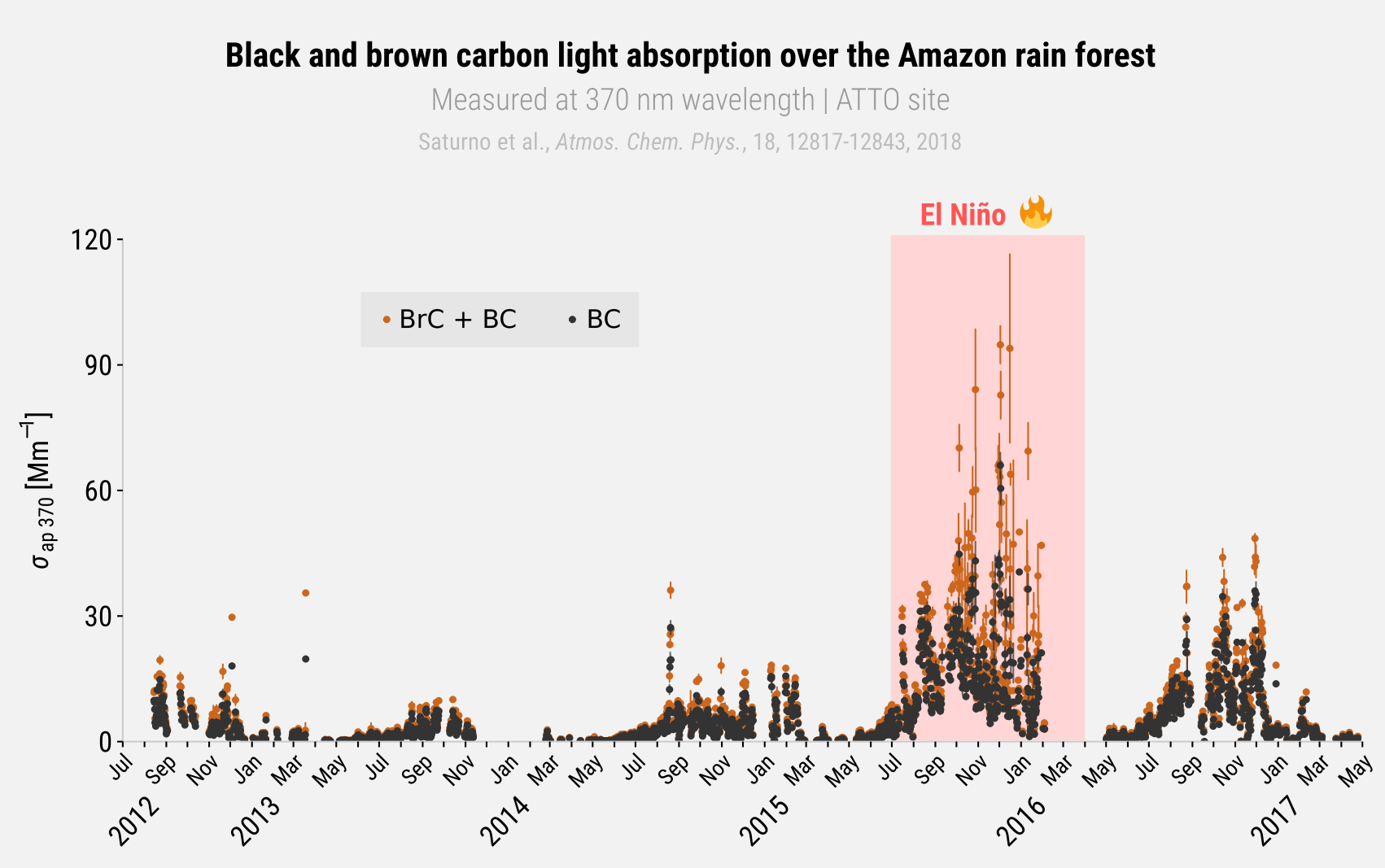
Light absorption coefficient by aerosol particles, reflecting the severity of fires in the Amazon during the El Niño periodJuly 2012 to May 2017, measured at the Amazon Tall Tower Observatory. Reference: https://acp.copernicus.org/articles/18/12817/2018/ Attribution: Stratokumulus
Water levels
A prolonged dry season also means lower river levels. During the 2023–2024 El Niño, drought conditions intensified by climate change contributed to historically low water levels across parts of the Amazon Basin. Perhaps the most iconic consequence was the death of more than a hundred dolphins in Lake Tefe in the Brazilian Amazon.
While it is impossible to predict exactly what this upcoming El Niño will look like, the impacts of low water extend far beyond ecosystems themselves.
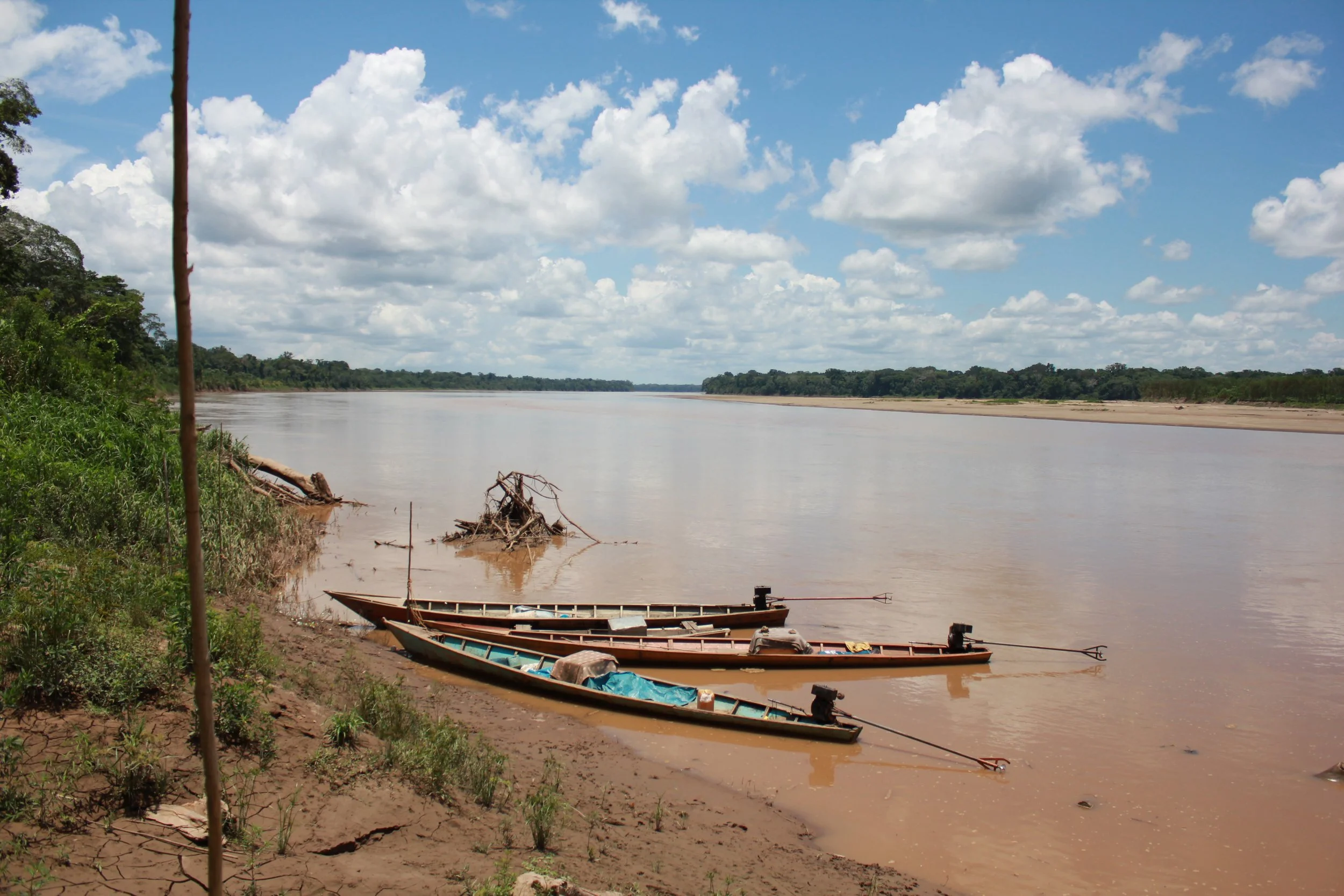
In much of rural Amazonia, rivers are the roads and lifelines that connect communities. When river levels drop, water becomes more stagnant, reducing water quality and increasing the risk of bacterial disease. Transportation also becomes difficult or impossible. Boats require more fuel to navigate shallow waterways, making travel slower and far more expensive — a serious challenge in regions already facing high fuel prices and economic hardship.
Hydropower and Energy
Many Amazonian countries depend heavily on hydropower, with much of their electricity generated from rivers that drain into the Amazon Basin. In Ecuador, for example, roughly 75% of electricity comes from hydroelectric dams connected to Amazonian watersheds.
During the 2023–2024 El Niño, drought conditions strained electricity generation across the region. In Ecuador, the crisis magnified existing infrastructure problems and contributed to rolling blackouts that had widespread negative impacts on Ecuadorian society.
As climate extremes intensify, dependence on hydropower alone may leave many countries increasingly vulnerable.
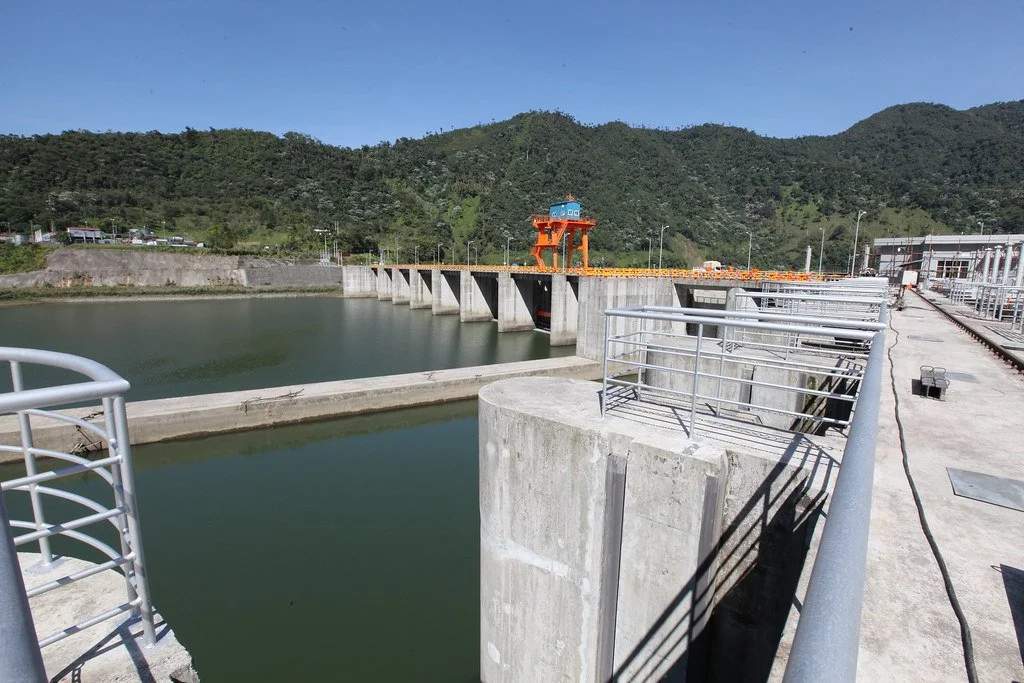
Construction of the Coca Codo Sinclair Power Plant began in July 2010 in the province of Napo, Ecuador. The project required an investment of $3 billion, and his since faced challenges of providing reliable energy during periods of low water availability. Photo by: amalavida.tv
A Look to the Future: Climate Resilience and Responsibility
Only two years have passed since the last El Niño, and the Amazon may already be facing another with potentially far-reaching consequences. Today, science allows us to forecast these climate patterns better than ever before. Yet preparation and adaptation continue to lag far behind.
During COP30 negotiations held in Belém do Pará, deep within the Brazilian Amazon, leaders discussed climate finance mechanisms aimed at supporting adaptation and recovery, including the proposed loss and damage fund. But commitments alone are not enough. Governments must take climate resilience seriously and invest in long-term preparation for increasingly severe droughts, heat waves, and ecosystem disruptions.
The Global North also cannot continue viewing the Amazon as an endless source of expendable raw materials while the region bears the growing burden of climate instability.
At the same time, Amazonian communities need stronger infrastructure, better urban planning, improved water security, and more resilient transportation systems. Countries across the region must also diversify their energy supplies to reduce dependence on increasingly unreliable hydropower systems in a warming world.

Children participating in the Amazon Riverkeepers program, that engages local Kichwa youth in kayaking, environmental education, and sustainable tourism training. Photo by Ethan Duvall.