Gold Mining in Napo: Sacrificing the Amazon in the Name of Development
This article, made possible in part by the Amazon Rainforest & Conservation Collaborative (ARCC), was originally published in Icarus Complex Magazine (shared with their generous permission). Please support their coverage of important environmental topics around the world.
Words and photos by Daniela Beltrán, ARCC Journalism Fellow.
“Despite Ecuador granting constitutional rights to nature, its right to exist and maintain its natural cycles has been systematically violated.”
Napo Under Tension
Diego Robles drives with a worried look, constantly scanning his surroundings and identifying miners’ vehicles, trucks trafficking diesel, and people who recognise him. He knows he’s being watched too.
When he’s not on expeditions into the deep and inaccessible rivers of the Andes, he carries his drone and GPS while guiding tourists in kayaks and rafts through the emblematic rivers of Napo Province: the Jatunyaku, the Anzu, and the Napo rivers.
Every time he navigates, he takes the opportunity to monitor the territory and the expansion of extractive activities threatening his home. He doesn’t know exactly when his life became so exhausting and secretive, days spent surrounded by cameras, lenses, GPS trackers, and clandestine operations with a small group of people, risking their lives to defend the territory.
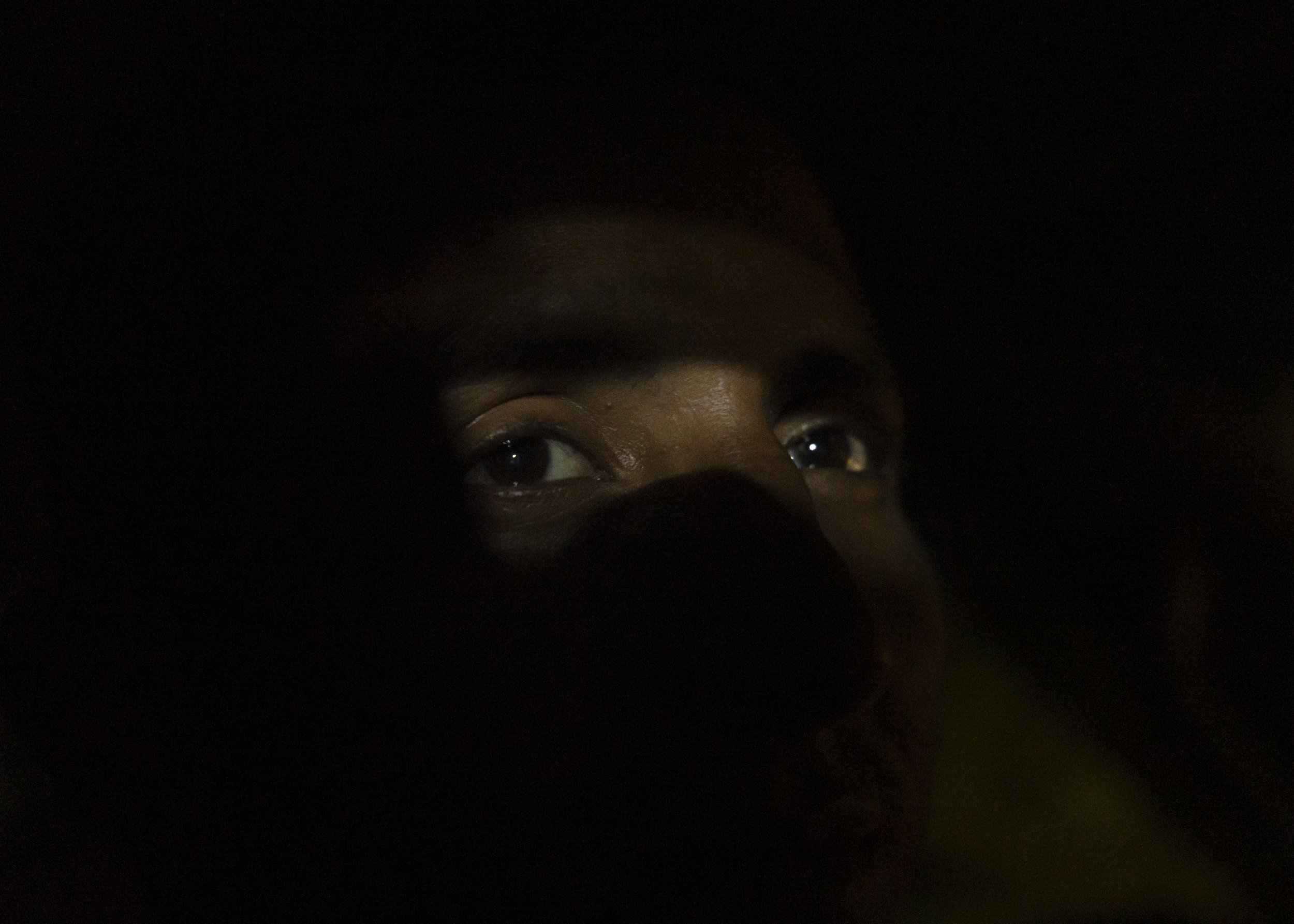
“My mother lived with one lung for fifteen years and died because of the oil industry. I don’t want to lose my second mother. That’s why I do this,”he says, his eyes dimmed by sorrow, yet lit with the quiet fire of purpose.
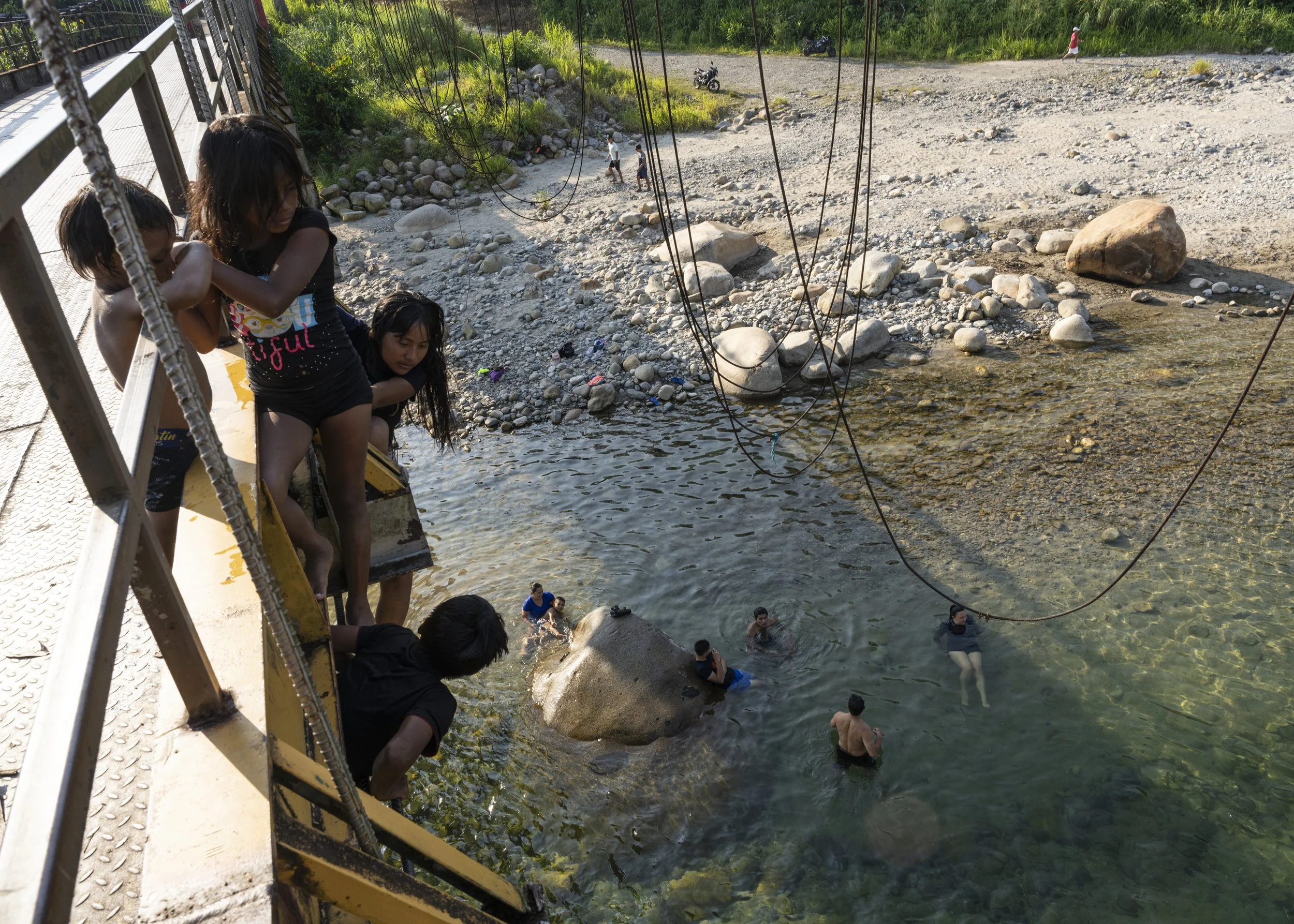
Diego parks the car far away and walks to meet a vehicle without license plates. He encounters three military intelligence men dressed as civilians whom he didn’t previously know, prepares the rafting equipment, and soon they are flowing down the Anzu River. Fourteen dredges along the river, and about forty men wash gold beneath a bridge as the raft passes just meters away from them. A man watching from the bridge starts typing a message on his phone.
“He’s a lookout,”says one of the military men, who for security reasons never shares his real name, a cautious safety measure.
The noise of the dredges, the men’s fixed gaze, and a raft that can hardly be disguised as a tourist trip create a tense atmosphere and a disturbing sight, given that two years ago dredges were uncommon to see along the river. However, this is not the purpose of the secret military operation.
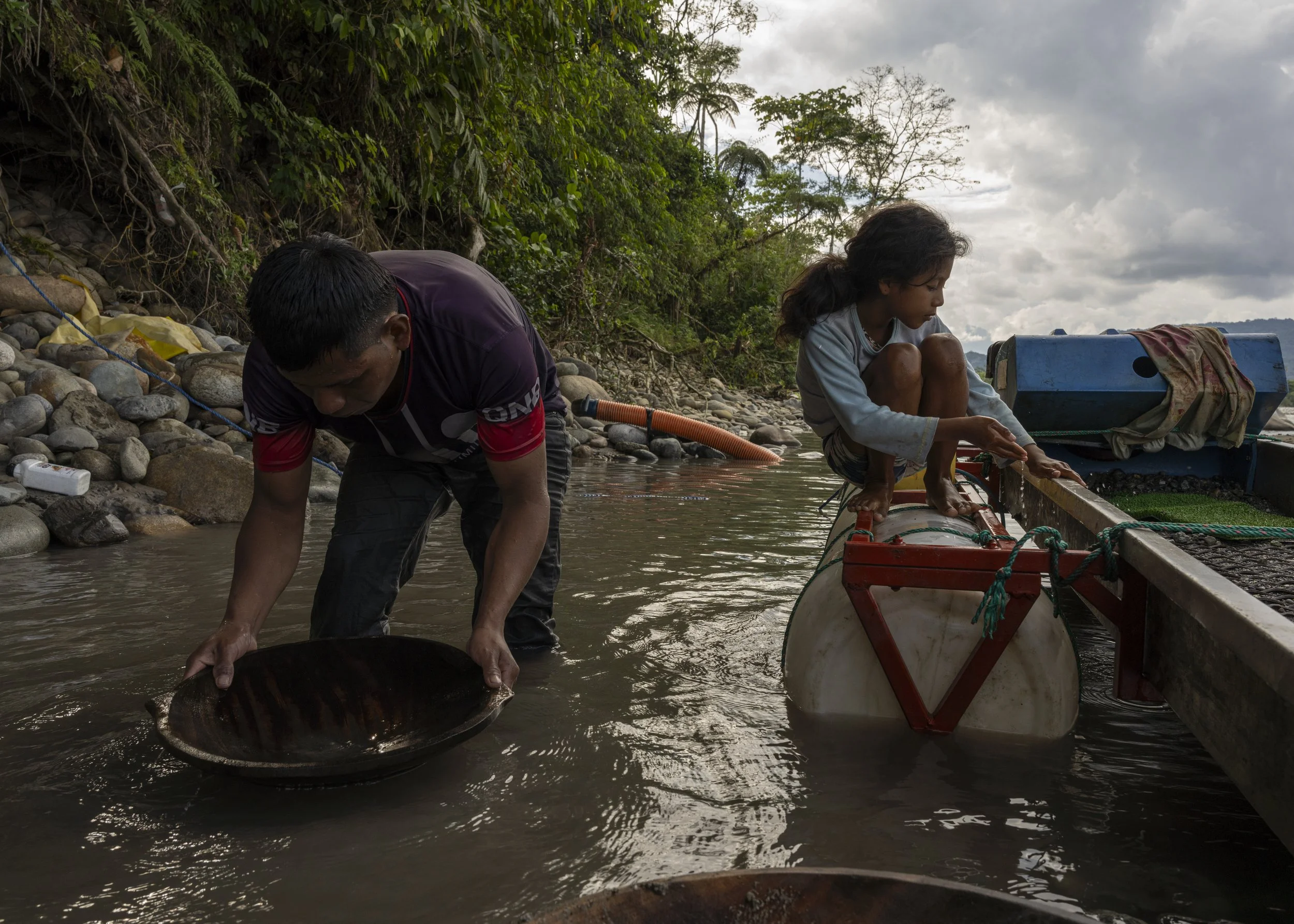
They pull the raft ashore on a beach where a small brown-coloured river flows into the Anzu, contrasting with the clean water descending from a long path from the Andes mountains. Diego flies the drone to observe what is truly alarming: heavy machinery operating illegally in the upper part of that river. Multiple excavators remove trees and rocks in search of tiny gold particles that have inhabited these rivers since ancient times. Large patches of deforested jungle expand in various spots along the river’s path, releasing toxins and polluting the water. Just meters downstream, a young girl bathes next to a fishing net crafted by local families to catch food.
The expansion of gold mining in Napo province has drastically transformed the territory. Despite the efforts of a small group of local defenders, activists, and security forces, the illegal network fueling mining activities has not only accumulated economic power but also infiltrated government institutions.
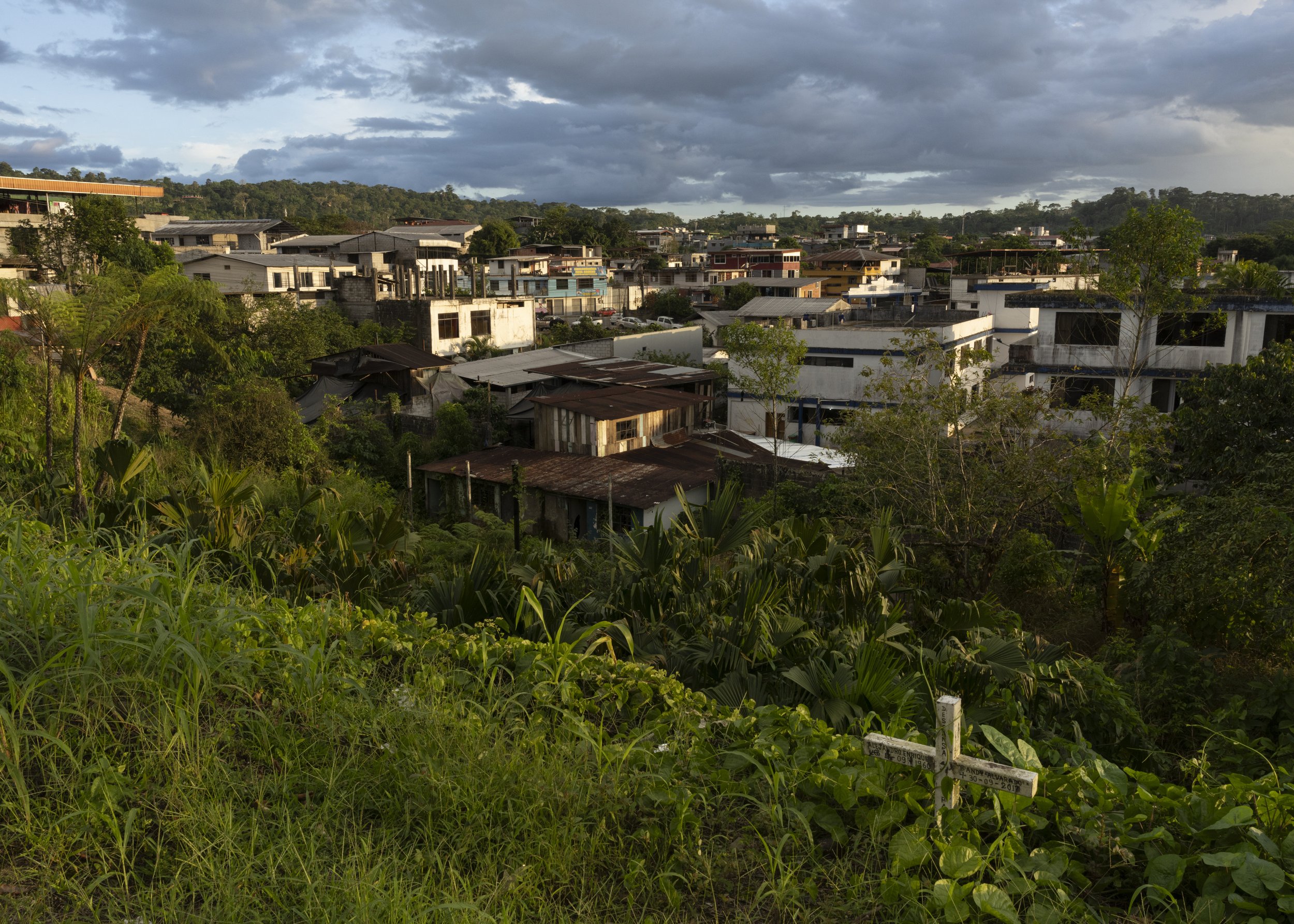
A remote view of the town.
According to a police chief from the central government administration—who also requested anonymity since he leads major operations to combat illegal gold mining in Napo—solving the current crisis in the territory is nearly impossible because “at least 90% of government institutions in Ecuador are taken over by organised crime.” Oftentimes, when attempts are made to seize machinery and identify individuals involved in illegal activities, information is leaked, and the ambiguous legal framework along with institutional corruption result in criminals walking free, while the legal and illegal extractive frontier expands rapidly.
The actions and inactions of the State, have not only created the perfect conditions for organised crime’s expansion and territorial control, but also make them complicit in the ecocidal and ethnocidal crimes being committed with impunity against the rivers, the jungle, and the inhabitants of Napo.
Controlling illegal operations has become increasingly dangerous. Just nine months later, eleven soldiers were killed by bombs in an ambush during a mission against illegal mining along the border of Napo and Orellana provinces in the Ecuadorian Amazon.
Sacrificed by Design
“The Amazon region isn’t seen as an area that should be developed in all aspects. No, it’s seen as a sacrifice zone,”says José Moreno, President of the Council of Defenders of Human Rights and Nature, coordinator and founder of resistance collective Napo Ama la Vida, and director of the Tourism Association of Talaj parish. The Kichwa community of Kando, to which he belongs, is located within a mining concession granted by the State to the company Black Pearl Mining without respecting the Constitutional Rights of prior, free, and informed consultation.
Alongside the Rights of Nature, this law was granted in 2008 to guarantee the autonomy and collective decision-making of Indigenous Peoples and Nationalities regarding any process related to extractive activities in their territories. Even though Ecuador became the first country in the world to grant constitutional rights to nature, its right to exist, to generate, to reproduce and to maintain its natural cycles has systematically been violated in the frame of extractive activities.
Despite lawsuits filed by human rights and environmental lawyers against the Ministry of Environment, Water and Ecological Transition, the Ministry of Energy and Mines, and the Mining Regulation and Control Agency, none of these institutions have fulfilled their duties and direct responsibility in preventing violations of human and nature rights in the context of resource extraction. According to Moreno, “around one hundred forty-six mining concessions have been granted illegitimately, meaning that all concessions currently operating in Napo territory are illegal”.
“In Napo, at least three rivers have been declared dead due to their inability to sustain life.”
Even with clear evidence exposing the institutional deficit in the Ecuadorian government, current right-wing president Daniel Noboa has eliminated six ministries and dismissed five thousand public employees, transferring the functions of the Ministry of Environment, Water and Ecological Transition to the Ministry of Energy and Mines.
For many activists, residents, and academics, Napo’s sacrifice is not an isolated case but a phenomenon spreading across historically marginalized Indigenous and campesino territories, with the indispensable support of the state apparatus and oftentimes with foreign financing.
The term “sacrifice zone,” now increasingly present in environmental justice discourse and scientific research in Latin America, originated in a different context. During the Cold War, the U.S. Academy of Sciences used it to refer to areas designated for nuclear power testing, as their high toxicity and radiation would eliminate all possibility of life in the surroundings.
These zones, deliberately chosen by the state, mainly affected racialised, indigenous, and poor populations who suffered the health and environmental consequences of high toxicity in the name of national security and energy development.
“Some areas are already reporting cancer cases, and since 2018, catastrophic illnesses have multiplied tenfold.”
For over five hundred years, Latin America has been shaped by extractivist economies driven by external pressures, resource demand, and international market prices for natural resources, all in the name of fostering global development. The relentless expansion of the extractive frontier has generated severe social, environmental, and health consequences, sparking resistance movements across the continent in recent decades.
The Ecuadorian Amazon has undergone transformations historically shaped by external interests and influence aided by state policies. From the Rubber Boom that fueled Europe’s industrial revolution, to the colonisation programs driven by the 1964 Agrarian Reform with U.S. influence and funding, and the 1972 Oil Boom, the region has served as a source of raw materials for the world's industrial powers. Ecuador, like all Latin American countries, didn’t build its own industry but rather an economy based on extractivism and resource exportation—first to Europe and the United States, and more recently to China.
“In Napo, we continue to see mining activities that do not comply with the prior administrative requirements to explore and exploit gold,” says Andrés Rojas, a lawyer working in defense of human and nature rights, and current advisor to the National Assembly. “At first, we were dealing with miners operating illegally due to missing administrative steps. But now we’re facing criminal groups. Today, we see narco presence, organised crime groups, and armed groups in the territory.”
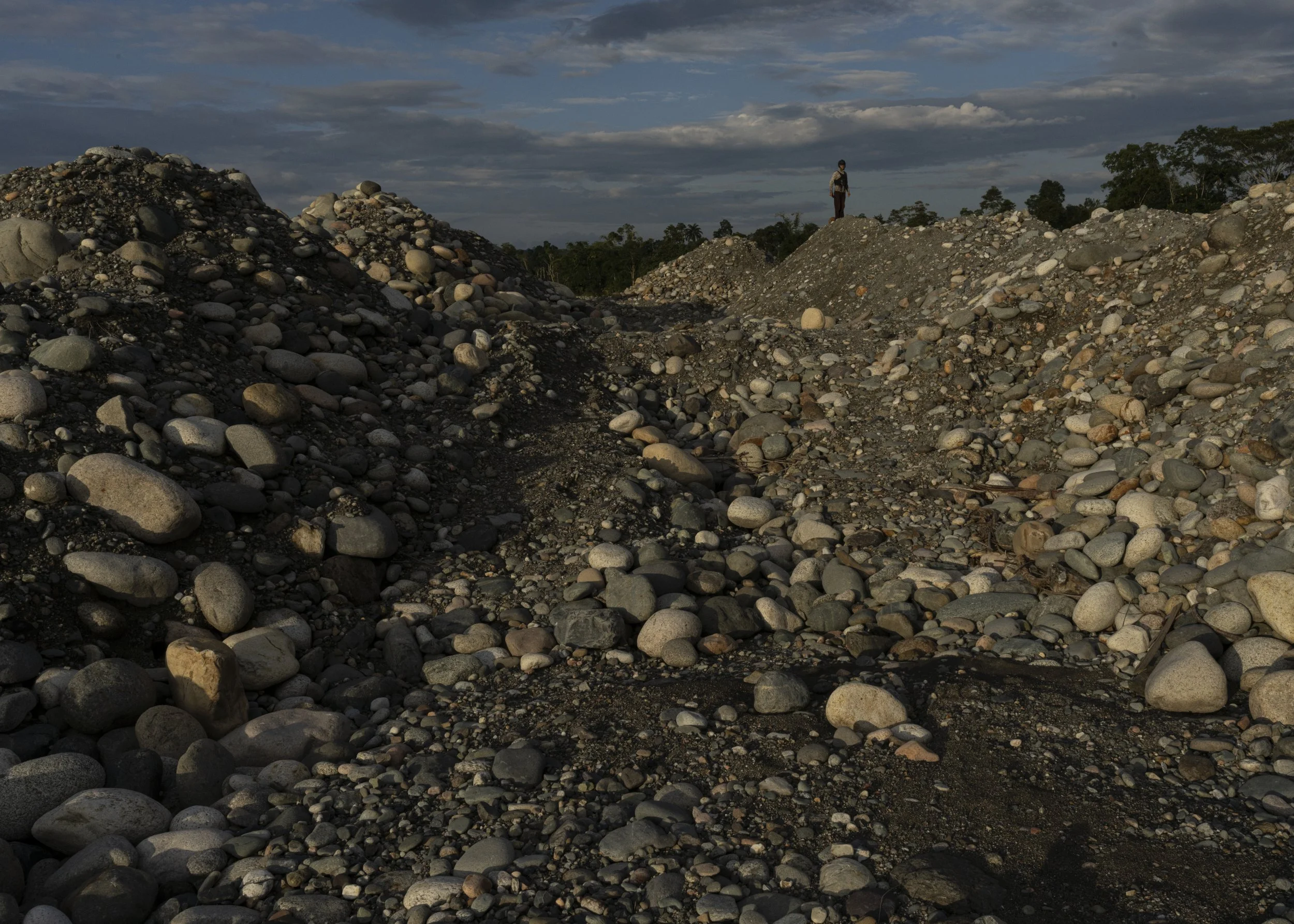
Ben Stookesberry, professional kayaker and activist, stands on a pile of rocks left behind by an abandoned illegal mine along the Anzu River.
The expansion of mining concessions and extractive frontiers has a direct correlation with the presence of organized crime, which has taken control over the territory. This capture wouldn’t be possible without institutional corruption, a trend that has been well recorded and submitted to the prosecutor’s office by activists and human and nature rights lawyers. Politicians, police officers, governors, and leaders benefit economically from the hundreds of thousands of dollars generated by the illegal gold market in Napo, creating a network with enormous economic and political power increasingly difficult to dismantle.
In 2021, illegal activities were identified in the Yutzupino community near the Jatunyaku river. Despite the then-governor of Napo, Wilfrido Villagómez, being officially informed of the illegal presence of a handful of machines in the area, four months passed by without any action. “It went from five machines to over two hundred fifty in that area. In four months, around seventy hectares of primary forest were destroyed, a total of one hundred twenty hectares including the riverbed,” says Andrés Rojas. After the publicly known Operation Manatí and the seizure of one hundred forty-eight excavators, it was discovered that public officials, such as the director of the Mining Regulation and Control Agency, were involved in the activity and had their private machines operating in the illegal mining front.
An investigation by Bitácora Ambiental and Plan V, revealed that gold mining generates approximately seven to eleven million dollars per day. From Napo alone, one of the most biodiverse rainforest territories of just 13,271 square kilometers, up to three hundred fifty million dollars in gold are extracted per month. And in Yutzupino, over seven hundred million dollars in gold were illegally extracted in just one hundred four days.
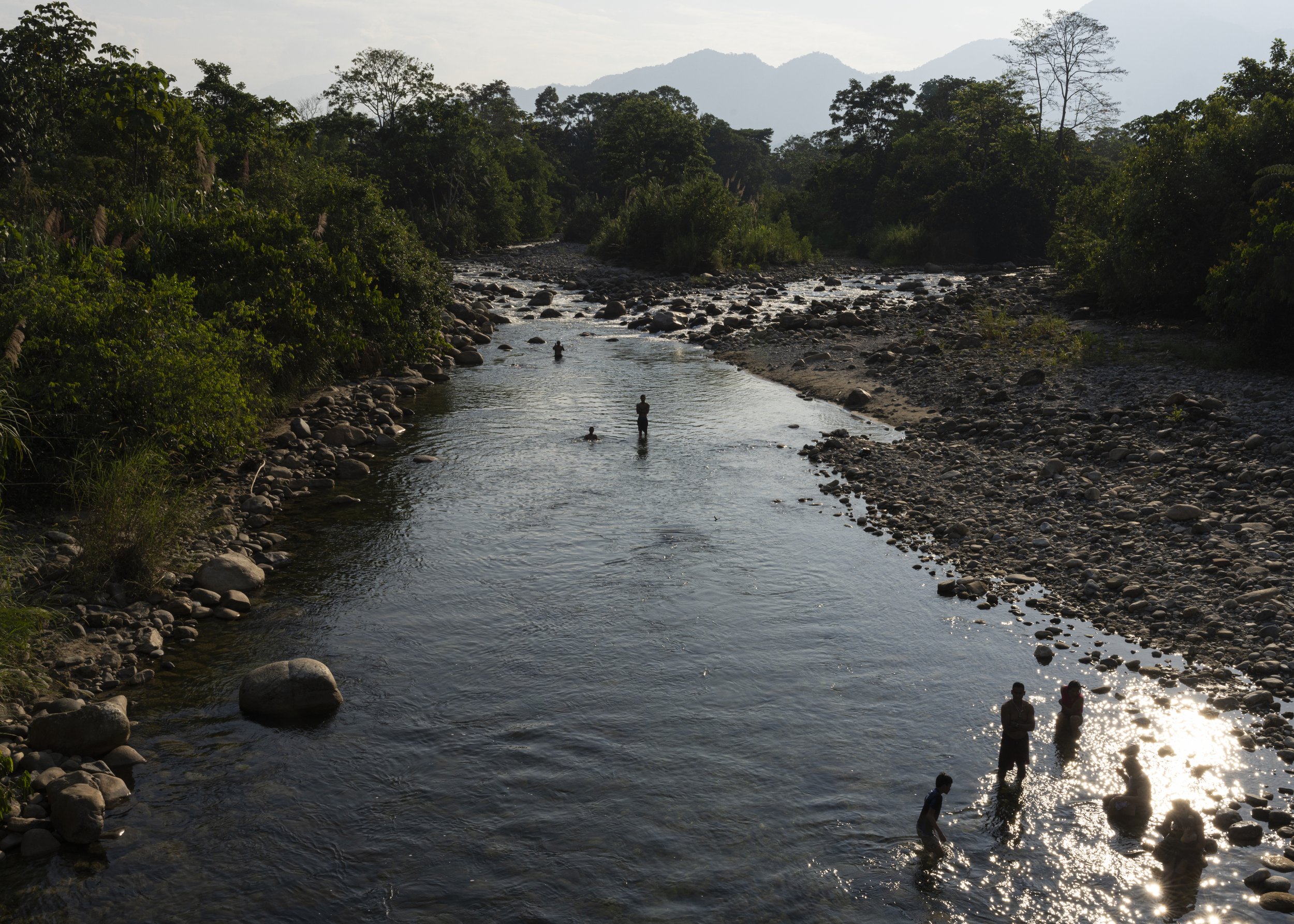
Kids playing in the river.
“Us Napenses say that we learn to swim before we learn to walk. We have a very direct relationship with the river.”
The Violence Behind Development
In a café overlooking the Pano River in the city of Tena, José Moreno says that “[in the case of Napo] the entry of mining operators into the territory has created an extremely high level of conflict, putting at risk the health of children, adolescents, and the elderly, due to the contamination of water sources.” He adds, “according to municipal and provincial land use plans, most communities do not have access to piped water, let alone potable water. Eighty-four percent of our population consumes water directly from the rivers”
According to surveys conducted by the Amazonian university IKIAM and independent researchers, high levels of heavy metals such as mercury, zinc, cyanide, and chromium have been identified—exceeding permissible limits by up to five hundred times in the rivers where mining activities occur in Napo. Although the use of mercury is prohibited in Ecuador, it is systematically used in gold extraction to separate particles from sediments, and according to local populations, even within concessioned areas.
“Us Napenses say that we learn to swim before we learn to walk. We have a very direct relationship with the river,” shares Andrés Rojas.
The Napo River, downstream, is home to more than six hundred communities along both its right and left banks. In addition to the reciprocal relationship the people of Napo have with the river, around thirty thousand people rely on rainwater and river water as their only source for cooking, bathing, washing clothes and dishes, drinking, and for all daily uses of this essential element for life. Heavy metals do not dissolve or disappear, so communities are consuming contaminated water as a result of gold mining, with the full awareness of government institutions and the Ecuadorian state.
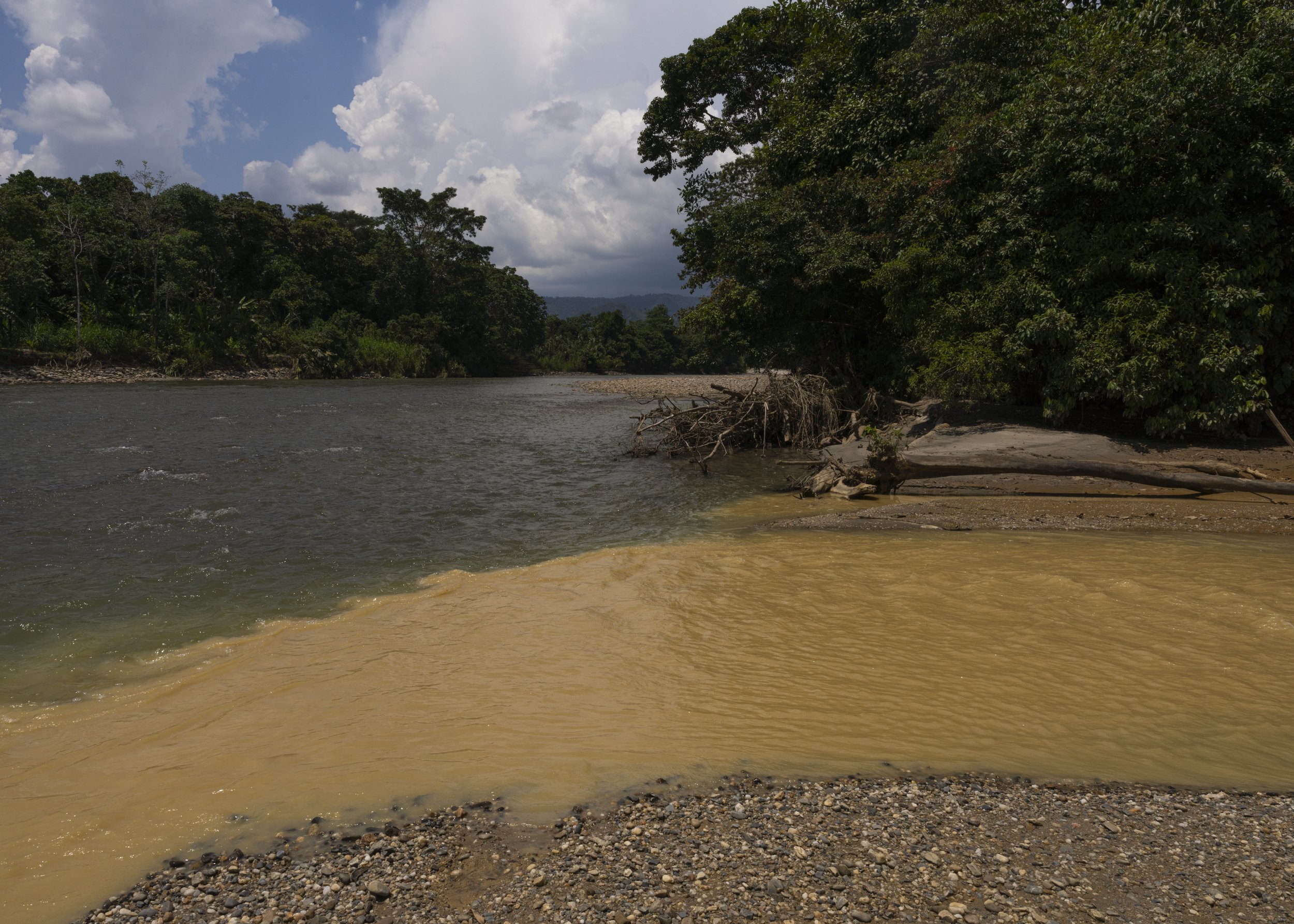
The contaminated river flows into the Anzu, which merges with the Jatunyaka to form the largest tributary of the Amazon.
The contaminated river flows into the Anzu, which merges with the Jatunyaka to form the largest tributary of the Amazon. The toxins travel downstream, affecting hundreds of thousands of families before reaching Brazil and emptying into the Atlantic, causing widespreed ecological harm. For Indigenous communities who depend on these rivers, the consequences are dire: rising cancer rates, death, and the loss of their most essential resource—water
“Some areas are already reporting cancer cases, and since 2018, catastrophic illnesses have multiplied tenfold,” says Andrés Rojas, who describes this process as ethnocide. Despite the severe contamination of rivers flowing across political borders, no alert campaigns have been carried out to warn Indigenous riverine populations about the potential health impacts of water use, nor have any protective measures been implemented. Some communities in Carlos Julio Arosemena Tola canton, one of the most affected by gold mining, live surrounded by toxic rivers where they can no longer swim in, fish from, or drink. In addition to losing their access—and their right—to clean water, people are now forced to depend on a State that has failed to uphold its responsibility to protect the wellbeing of Amazonian populations.
In Napo, at least three rivers have been declared dead due to their inability to sustain life, and Andrés Rojas also describes this as biocide. Although legal cases have been filed since 2019 declaring violations of the Rights of Nature and the Rights of Indigenous Peoples and Nationalities, these processes remain stalled in the Constitutional Court and the Prosecutor’s Office without the relevant rulings being enforced.
The connection between the health of the river, the jungle, and the human and non-human beings that inhabit the territory reflects an undeniable interconnectivity and fragility of this region.
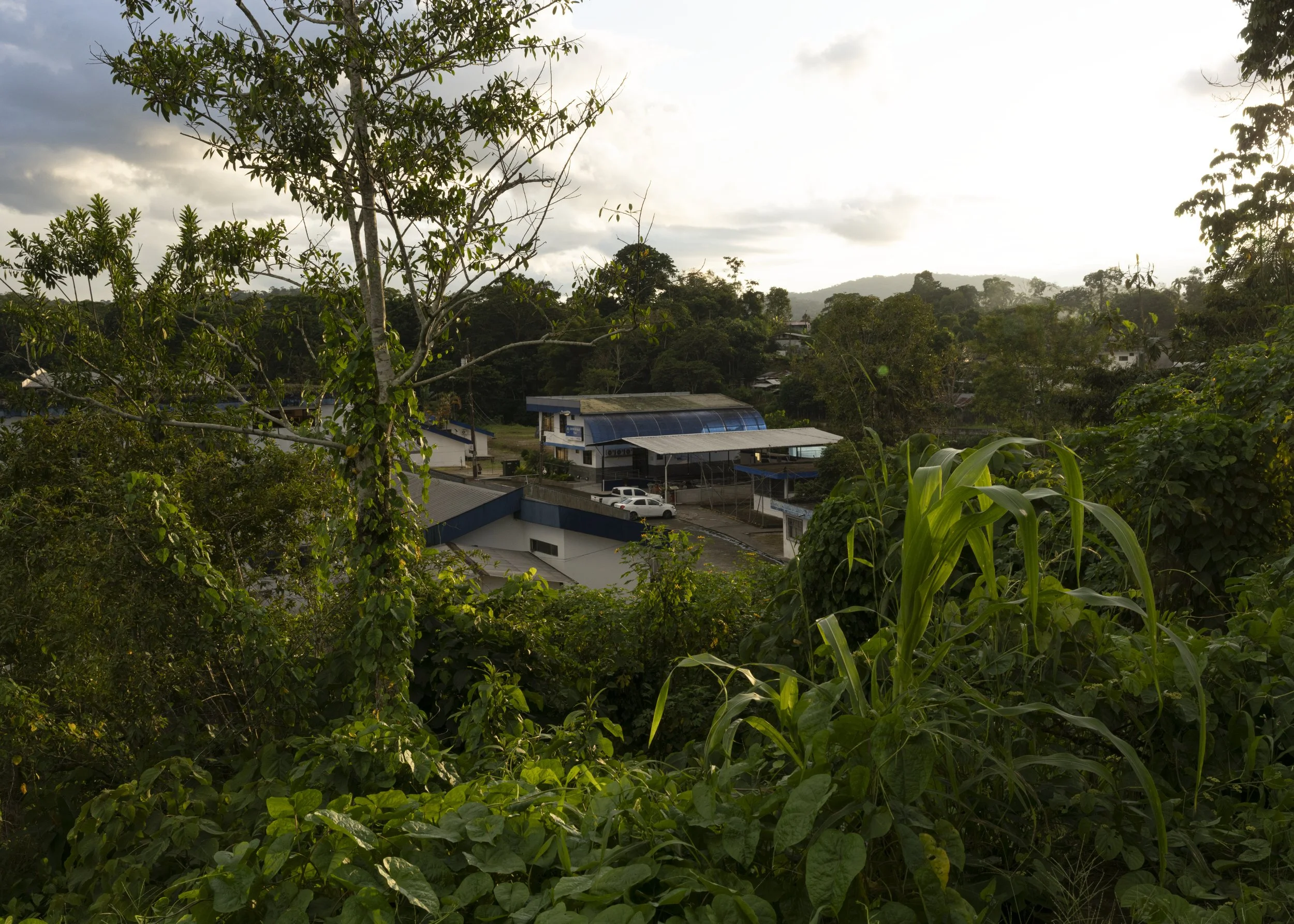
Police station in the Amazonian city of Tena, Napo, Ecuador.
The Social Sacrifice
Wooden houses, just a few meters apart from one another and home to large extended families of siblings, cousins, nieces, nephews, and grandchildren, stretch across various riverside communities. Long green plastic sheets block the view of massive swaths of deforested jungle and the stones removed from their original place to create holes and pools beside the river, where hundreds of liters of freshwater are used to wash gold with toxic chemicals. In some cases, the noise of the machines is impossible to hide; in others, the silence of a devastated and abandoned territory is even louder.
Indigenous nationalities have traditionally operated under ancestral models of communal governance, where decisions are made collectively. However, as José Moreno explains, the lack of education and knowledge about the consequences of extractive activities, structural poverty, state abandonment, and institutional irregularities have led some community members to become allies of illegal miners—creating new forms of governance with authoritarian leaders who hold power, and even armed guards provided by mining operators.
“Perhaps Napo reveals that extractivism brings only death. And that this death is called development.”
The recruitment of community leaders and the fragmentation of the social fabric have become effective mechanisms for facilitating the entry and expansion of mining activities. In addition to community division, coercion is generated through promises of development, alcohol, cigarettes, and other material goods. In some cases, miners form relationships with Indigenous women and become part of the family with influence and decision-making power over the territory.
Just a few meters from some Indigenous families’ homes, structures with blue plastic walls stand in stark contrast to the environment. Mining settlements are spreading along rivers that are gradually disappearing.
"One of the most alarming phenomena is that pregnancy rates are extremely high among girls under sixteen years old; there are twelve-year-old girls who are pregnant,”says José Moreno, with a fixed and indignant gaze. Under Ecuadorian law, these are cases of rape, which have increased near mining settlements and are not being properly reported by the Ministry of Health nor the Ministry of Education. Furthermore, cases of trafficking of young girls in exchange for protection, benefits, or money from miners have been documented.
The advance of gold mining—legal and illegal—has led to an increase in bars and brothels, alcohol and drug consumption, and the erosion of parental authority over youth who are easily drawn into mining-related work, generating money that pulls them away from their homes and cultures.
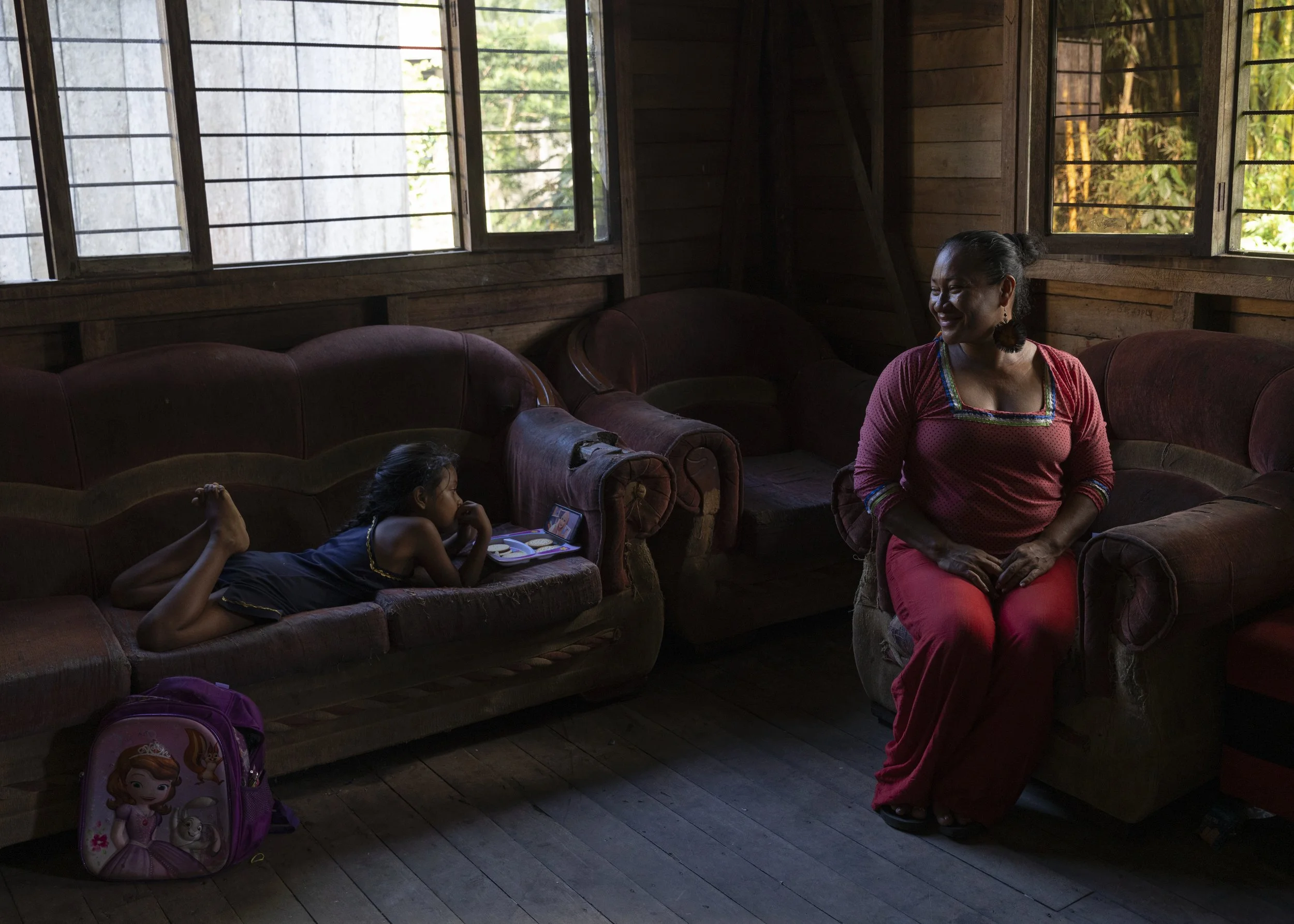
Elsa Cerda and her daughter at their house in Tena, where they spend part of the week to be closer to better schooling. The rest of the time, Else lives in Serena, leading the Indigenous guard that defends their territory from mining.
The Jungle Defending Itself
Despite the social and ecological crisis in Napo, resistance movements are emerging, unifying and raising their voices on behalf of the rivers, the jungle, and all the beings that inhabit the territory. Many indigenous people across the Amazon Basin have established that they are the jungle defending itself, understanding that Nature is not separated but a living being from which we are a part of.
Women from the Kichwa community of Serena formed Yuturi Warmi, the first Indigenous women’s guard. Despite attempts of manipulation and threats, the thirty-five strong women have managed to keep their territory and rivers free of mining.
“We will only allow mining over our dead bodies. Even if we have to die of hunger, of thirst, of anything, we will be there, standing and fighting to defend our territory because we want our children and grandchildren to enjoy the good life we once lived,” says Elsa Cerda, current leader of the Yuturi Warmi, who understands that rivers cannot be bought with money and that the health of the territory means the health of all life.
Networks like Napo Ama la Vida, Napo Resiste, Yakuchuris, Amazon Frontlines, Alianza Ceibo, CONAIE, residents, activists, lawyers, artists, kayakers, children, environmentalists, women, men, elders, politicians, journalists, and researchers continue working with the certainty that our collective human life depends on protecting the land and the rivers of the Amazon Rainforest and the indigenous people that have historically safeguarded the territory.
Diego keeps paddling every day—witness and defender, student and educator, an ally of the river that watched him grow. “The river cries, and no one listens,” he says, warning that the Amazon is in danger and the future wavers in the hands of a few.
Napo is not an isolated tragedy, but a mirror. A pattern that repeats itself across time and territories, throughout Latin America and Africa, remnants of a system built on the exploitation of land, the oppression of Indigenous peoples, deception, abuse, and the promises of a hollow material ideal that has clouded our judgment.
Perhaps Napo allows us to see our history with brutal clarity—our past repeating itself, unfiltered. The expansion of a project dragging us, collectively toward collapse.
Perhaps Napo reveals that extractivism brings only death. And that this death is called development.
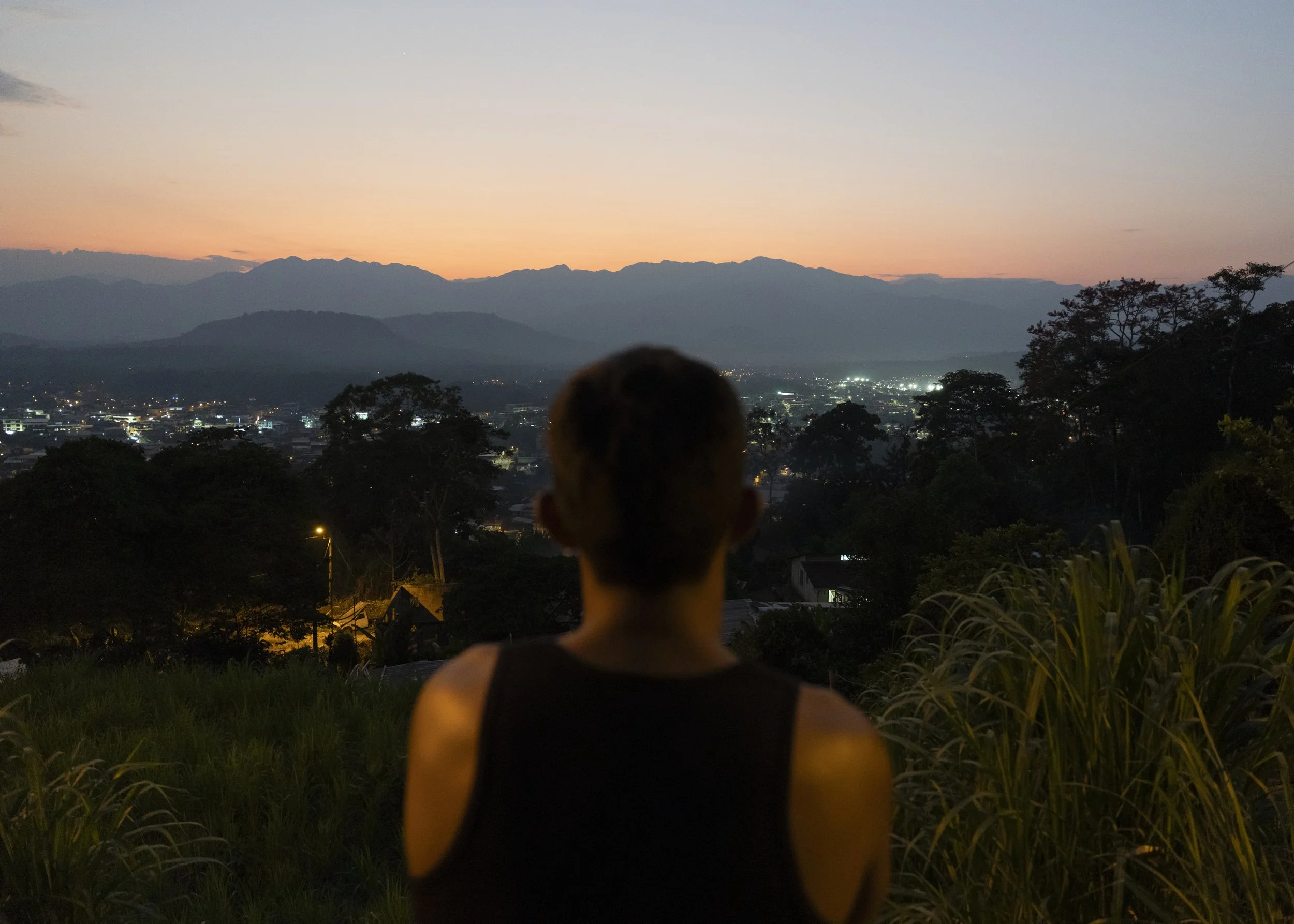
“Napo is not an isolated tragedy, but a mirror. A pattern that repeats itself across time and territories.”
This article, made possible in part by the Amazon Rainforest & Conservation Collaborative (ARCC), was originally published in Icarus Complex Magazine (shared with their generous permission). Please support their coverage of important environmental topics around the world.
These stories would not be possible without the grassroots support of our donors. Support our work in the Amazon Rainforest, and help empower local conservation leaders by making a contribution today. Learn more by clicking the button below.