Waorani Guardians Launch New Patrols in Yasuní—Weak Enforcement Leaves Peoples and Biodiversity at Risk


The Baihuaeri Waorani have lived for centuries in what is now the heart of the Yasuní Biosphere Reserve in the Ecuadorian Amazon. Their ancestral territory encompass nearly one million acres of pristine rainforest and overlap the Intangible Zone, home to the last isolated Waorani peoples—the Tagaeri, Taromenane, and Dugakaeri—whose survival depends on an intact, undisturbed forest. Today, however, intensifying ecological threats on all borders demand new strategies, even for one of the most remote Indigenous groups in the region.
Community members of the Baihuaeri Waorani have documented illegal incursions along the eastern edge of their territory, representing the Perú-Ecuador border. Peruvian poachers and loggers cross into Baihuaeri territory by river, taking advantage of the absence of government control at the border. From other directions, expanding oil exploration and production and roads spurred by oil development bring contamination and deforestation by oil companies and colonizers whose expanding agriculture fragments the landscape. Even as the most biologically diverse region on Earth, Yasuní and the Baihuaeri Waorani’s ancestral territory remains more vulnerable than ever.
A Community-Led Territorial Defense Initiative
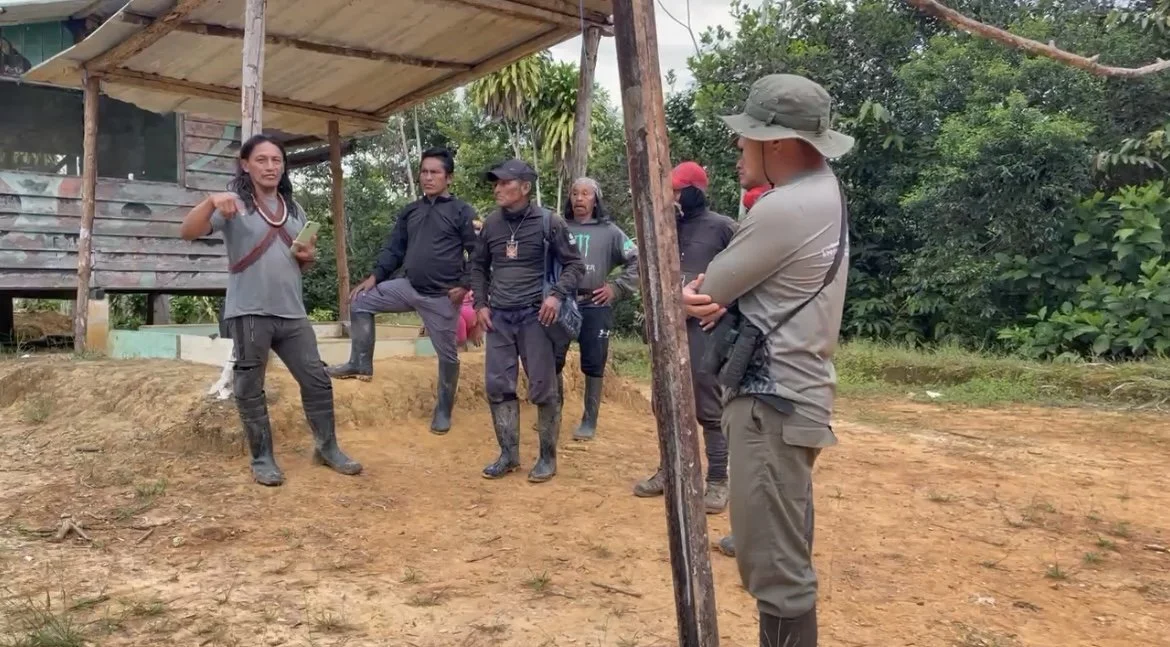
In response to mounting threats, the Baihuaeri Waorani of Bameno launched a new territorial monitoring and defense initiative in 2025. Led by traditional leader Penti Baihua and the grassroots organization Ome Yasuní, with support from the Annenberg Foundation and the Amazon Research & Conservation Collaborative (ARCC), the effort blends ancestral ecological knowledge with modern tools. Monthly patrols along the Cononaco River mobilize community members to detect and report illegal incursions. Patrol groups travel by canoe, supported by solar-powered communications, cameras and a drone. Javier Baihua, son of Penti Baihua, works alongside his father, helping to connect traditional knowledge with modern technological tools.
Alongside patrols, the project is building long-term community capacity through training in mapping with support from ARCC. The project has also strengthened alliances with neighboring Waorani communities, improving communication, coordination, and shared monitoring efforts across a much larger landscape.
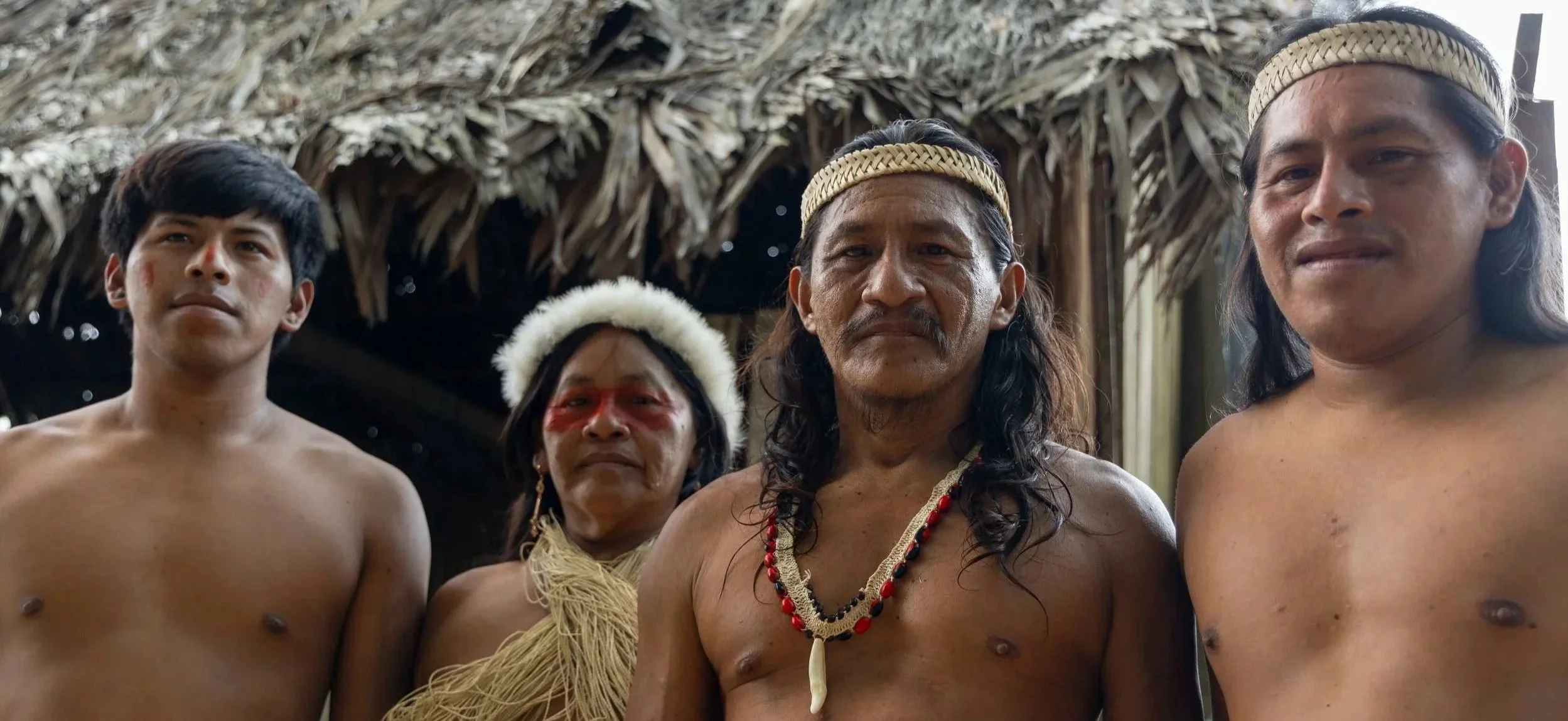
Penti Baihua (right center), leader of Ome Yasuní and Baihaueri patrols, stands with his family in his home of Bameno.
Photo by: Naia Andrade.
A Major Poaching Operation Exposed—Government Response Raises Concerns
Within weeks of launching the initiative, the Baihuaeri Waorani intercepted a significant poaching operation. A houseboat and two canoes were stopped inside their territory, with illegally hunted wildlife: giant river turtles, peccaries, curassow, arapaima, and other ecologically important species. The patrol quickly, alerted Ecuadorian military and environmental authorities, and coordinated with government officials the following morning to disarm the Peruvian suspects and take them into custody, offering a moment of alignment between community defenders and state institutions.
Later that day, however, when Penti followed up with the environmental agency to inquire about the detainees, he was told that the suspects had “left the area.” The information about how they had departed was vague. Concerned, Bameno leaders wrote to Ecuador’s Ministry of Environment (MAATE, now part of the Ministry of Environment and Energy) seeking clarification. They asked who had made the decision to free the Peruvians and what had happened to the boat, canoes, wildlife and arms that had been confiscated. They also asked about what the government was doing to follow up, and which officials were responsible for following up. MAATE responded that the park guards are vulnerable because they are not authorized to carry arms, that the suspects had “escaped” with their boat, wildlife and gear, and that Ecuador’s military is responsible for controlling the border.
The circumstances raise serious questions about the government’s commitment to protecting Yasuní, its biodiversity, and the rights of Indigenous peoples, including the uncontacted Waorani. For communities risking their safety to defend their homeland, a lack of transparency and accountability sends discouraging signals. However, Penti is currently in discussions with MAATE officials regarding future expectations for patrols and cooperative defense in Yasuní.

Deterring poaching in Yasuní protects the most biodiverse rainforest on Earth, safeguards uncontacted Waorani communities, and preserves the ancestral territory of the Baihuaeri Waorani.
Photo by Awacito Baihua: A poaching operation intercepted by monitoring patrols.
Implications for Biodiversity and Uncontacted Peoples
Environmental crimes such as poaching, illegal logging, and mining often go unenforced in the Ecuadorian Amazon. Unregulated bushmeat hunting across the border can contribute to defaunation, with cascading ecological impacts. In addition to threatening the survival and well-being of the Baihuaeri Waorani, such losses are also dangerous for the uncontacted Waorani groups, whose survival depends entirely on the intactness of forest and animal communities. Encounters between uncontacted groups and armed hunters can be particularly dangerous, as the hunters carry firearms and other weapons far more lethal than traditional spears—and the government has not developed effective systems to hold invaders accountable or ensure the safety of these isolated peoples. These failures undermine Ecuador’s commitments to Indigenous rights and environmental protection, and threaten one of the last major expanses of undisturbed rainforest.
The Baihuaeri Waorani Continue to Defend Their Homeland
Despite these obstacles, the first year of the Baihuaeri Waorani’s territorial monitoring and defense initiative has demonstrated the incredible power of Indigenous-led monitoring. The presence of patrols has deterred would-be invaders, exposed poaching operations previously unknown to government authorities, and strengthened coordination among contacted Waorani communities. The initiative has also created opportunities for young community members to learn new tools, technologies, and monitoring techniques—laying the groundwork for long-term stewardship.
Even without adequate government support, Penti, Javier, and the Baihuaeri of Bameno remain steadfast in monitoring and defending their homeland, and protecting their uncontacted neighbors. Their leadership is the primary reason this territory remains intact, forming one of the largest and most ecologically valuable blocks of rainforest in the Ecuadorian Amazon. These efforts are just the beginning. The next phase of the project aims to continue monitoring trips, amplify capacity building for territorial mapping, involve more young community members, and continue strengthening alliances across Waorani territories in Yasuní , ensuring that the forest and its peoples remain protected for generations to come.
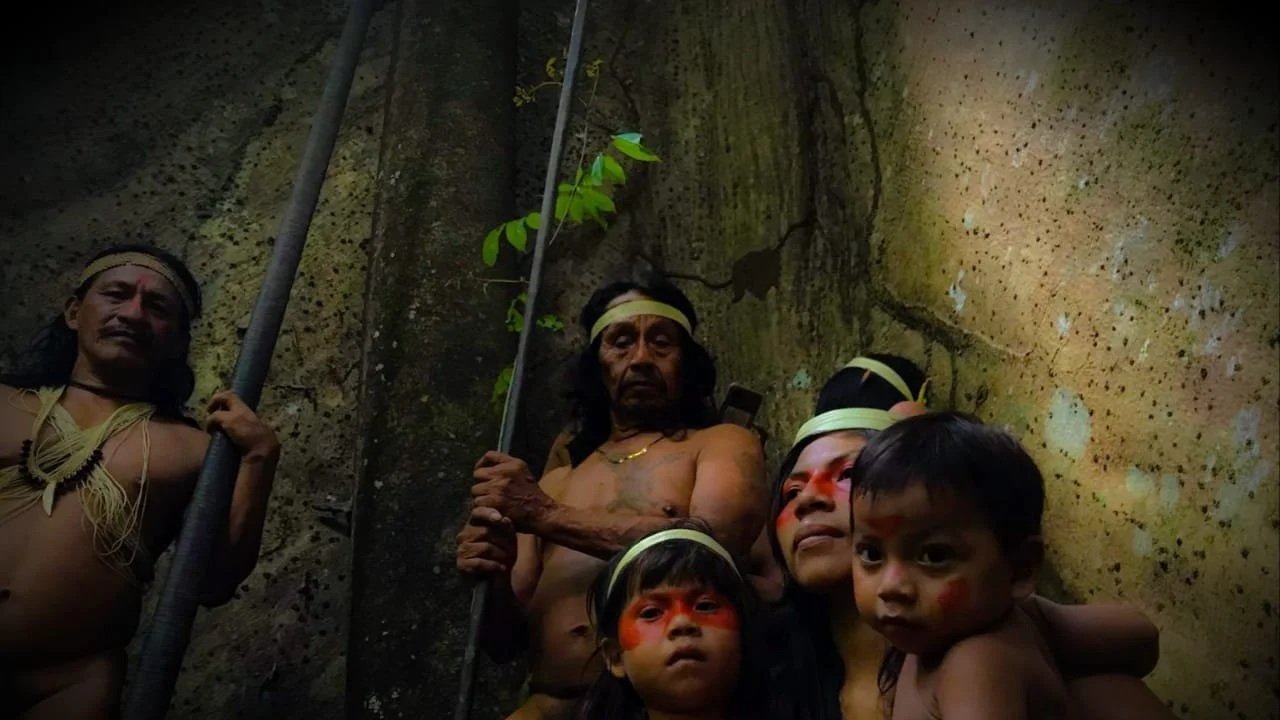
“We are Ome Yasuní.” Members of the Baihuaeri Waorani People of Bameno at the base of a ceibo tree in their ancestral territory.
Photo by: Awacito Baihua